Podcast
October 9, 2026
15 min watch
It might seem like an unlikely place to build a global energy technology company. Wellington, New Zealand, a city of around 400,000 people at the bottom of the Pacific. But for Factor co-founders Jessica Venning-Bryan and Simon Pohlen, it made perfect sense.
New Zealand was one of the first countries in the world to deregulate its energy sector, opening the door to competitive retail earlier than almost anywhere else globally. Alongside that, two significant energy software companies were founded here in the 1980s, one of them being Gentrack, which has since grown into a globally significant utility software business.
The result is a talent pool that has been developing for forty years. People who understand energy markets, who understand how to build and scale technology companies, and who have carried that knowledge into every corner of the Wellington ecosystem. As Jessica puts it, the city is peppered with people who have had that experience.
New Zealand did not just build that capability for itself. From the late 1990s, as other countries began their own deregulation journeys, New Zealand started exporting its energy technology expertise, first to Australia, then to the US, then to Asia and Europe. By 2026, New Zealand has what Jessica describes as unparalleled knowledge and talent in energy software, disproportionate to the size of the country by almost any measure.
Jessica and Simon started working together twelve years ago at Flick Electric. Neither of them came from an energy background, and that turned out to be one of their greatest advantages.
Without fixed ideas about how energy retail had to work, they kept asking questions. Why does it need to be this way? What would a bank do? What would a telco do? That mindset carried through to Flux Federation, where they turned their attention to the B2B market and began extending their thinking into international markets.
By the time Factor came around, they had accumulated something rare: deep foundational knowledge of the energy retail landscape, across all segments and multiple markets, combined with a consistent track record of approaching it differently.
Most software companies start in their home market and adapt later. Factor did the opposite. The first use case Simon and the team demoed was in the UK, built from Wellington. Everything in the platform was designed to be extensible into new markets without significant rework, because they knew from the start that a global company required a global foundation.
Simon points to New Zealand's market complexity as an unexpected advantage here. Victoria in Australia has four or five distribution network companies serving a similar population to New Zealand, which has thirty. That scale of edge cases and scenarios builds a kind of technical resilience that translates well when you take the product into new markets.
The commercial story is straightforward. Factor is a pricing and forecasting platform built for modern energy retailers. But the reason it exists goes deeper than that.
The old energy world was built around a simple model: one unit of energy, made in one place, moved to one customer, sold for one price. That model is being dismantled. Energy is now generated in more places, stored in more ways, consumed differently, and traded back in directions that did not exist a decade ago. The commercial infrastructure that turns all of that into products and contracts has to keep up, and most of it has not.
Factor was built to close that gap. To give utilities the tools they need to design and deliver products that work in the new energy economy, and in doing so, to help accelerate the transition that the world needs.
The acquisition by Gentrack in 2026 changed the scale of what is possible. Gentrack brings a global footprint of around sixty utility customers, and with it, the opportunity for Factor to get its technology in front of the organisations that need it most, faster than it could have managed independently.
Factor can be up and running in under fifteen minutes. Simon's line is that it can be stood up over a cup of coffee. That combination of lightweight implementation and deep capability is what makes the Gentrack partnership so compelling. The reach of an established global business, paired with a modern product that is fast to deploy and built for the complexity of today's energy market.
For Jessica and Simon, it is the acceleration of something they have been working toward for a long time. And by their own account, the pace of the next decade is going to make everything that came before it look slow.
...but also a market that's been really receptive to and hungry for the sort of improvements that a business can deliver if it has great software and great technology.
...not having fixed ideas about what energy retail needed to be and how it needed to operate, and how the software needed to work, and how the products needed to be designed, actually served us incredibly well. The old energy world was very much designed around, you know, one unit of energy being made in one place, being moved to one customer, being sold for one price. Well, all of the economics of that are completely different now — now being owned by Gentrack, well, we have this extraordinary opportunity to accelerate that vision.
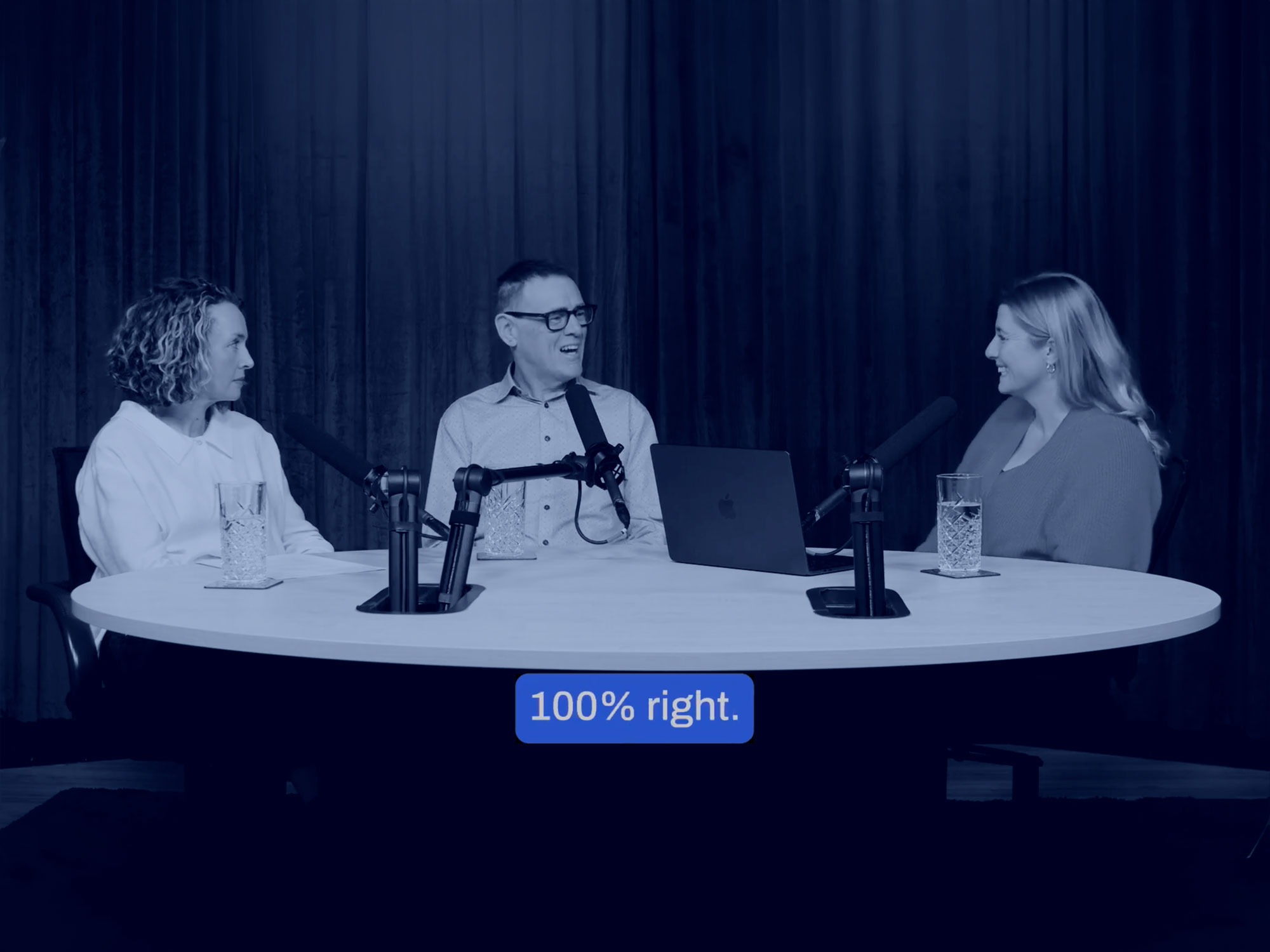
Hi, I'm Jess, Go to Market Lead at Factor. Factor is an API driven forecasting and pricing engine for teams leading through the energy transition. Today we're chatting with co-founders Jessica Venning-Bryan, and Simon Pohlen about how Factor supports pricing teams to do smarter, more efficient work.
Factor was founded in Wellington — for people outside New Zealand that might seem like a pretty unlikely place to start a global energy tech company. What do you think is special about Wellington when it comes to getting started in business, and the kind of work that you do?
I think what's special about Wellington is that we have this enormous pool of technology talent, first of all. So some really significant New Zealand companies were founded in Wellington, which just means it's kind of in its DNA that you would have people who understand technology, understand scaling companies, understand product and getting deep on customer problems. So there's this incredible talent pool. And it's not just a matter of trying to hire from that pool as a company, but those people then go into different roles — so they become recruiters or they become, I don't know, they move into banks or they... So the whole ecosystem here is sort of peppered with people who've had that experience, which means it's a very broadly supportive place to be starting a company, particularly a technology company. And it seems we have this disproportionate amount of energy tech and energy professionals for the size of the country that we live in.
What do you think is driving that?
So New Zealand's got this incredibly interesting history when it comes to energy technology, really driven by the fact that we were one of the first countries in the world to what we call deregulate. And it's a bit of a funny term because there is still plenty of regulation and energy, probably more. Yeah, a lot of regulation. But basically the energy sector was privatised and we ended up with competitive retail. And that happened very early in New Zealand on a global scale. And then the other thing that happened alongside that is that we had two very, very early energy technology companies in New Zealand. One of them was founded in the early 80s and the second one, which was Gentrack, was founded in the late 80s. And so there are these two really significant companies that have been around for a very long time building software for energy — you know, so long that their own businesses have been through multiple iterations, right. And so if you put those two things together, you end up with a talent pool that's developed over decades now — so, you know, 40 years in energy technology, but also a market that's been really receptive to and hungry for the sort of improvements that a business can deliver if it has great software and great technology. And so you bring those two things together, and we've just ended up with this really thriving environment for energy technologies and energy softwares. And then what happened in the late 90s is that as other countries started on this journey of deregulation, we started to export that technology. And so we ended up building these businesses that were really, truly global in their application and scope, and sort of knowledge of markets extended first to Australia and then to the US, then to Asia and Europe. And so we now find ourselves in a place in 2026 where New Zealand really does have unparalleled knowledge and talent and energy software.
You both obviously have a long career together, and obviously starting with Flick Electric, and heading into Flux and all these varied energy companies together. Jess, how do you think that that kind of experience, both together as founders, but also within these kind of energy, fast paced energy businesses, has sort of shaped what you — how you approach Factor and how you started to build it out?
Yeah, it's funny, I've said to a few people. Factor has felt like the shortest journey and the longest journey at the same time. So Si and I started working together 12 years ago, like you said, at Flick Electric, and both of us had dabbled in energy a little bit through some other businesses we'd been involved with. But energy had never been our prime focus. And so in so many ways, when we set about building that business — and not having fixed ideas about what energy retail needed to be and how it needed to operate, and how the software needed to work, and how the products needed to be designed — actually served us incredibly well. And so, you know, we right from the beginning were always asking questions about, well, why does it need to be like that? Why can't it be like this? If we were a bank, we'd be doing it like that. If we were a telco, we'd be doing it like this — and bringing sort of our different ideas and different experiences into that company. And then when we moved over to Flux after Flick was sold, that was — we were really charged in that business with looking at a different market segment. So looking quite hard at the B2B market segment versus the B2C segment at Flick. And that was just then a chance to really build on sort of that foundation that we'd developed at Flick and extend it into different market categories, extend that thinking into different territories, where Flick was New Zealand only, Flux was international. So by the time we'd sort of done another five years at Flux, we had this breadth of experience really across the whole energy retail landscape, both domestically and internationally, across all segments, but very much with an innovation mindset the whole time. And so when it came to identifying the problem that we solve at Factor and building the solution for that, it was just this lovely combination of having all of the foundational knowledge that we needed to kind of get the problem right before we even started on the solution. But then that innovative background, that opportunity that we'd had multiple times to do things a bit differently, really informed how we then have approached the solution to the problem as well.
Si, from a technical perspective, what do you think? What's been some of the challenges you've encountered building a really technically complex problem from here in New Zealand, obviously to begin with, and then going out globally and taking it to new markets. What's been some of the technical challenges?
I think one of the challenges that we've been lucky with — the international experience that we both had previously — is to, you know, when you're building something for one particular market, to always be open to how a different market does it differently. And so you actually need to be able to build something that can work in all markets without significant changes. And I think that's one of the hard things because it's always about trade offs. And I think this is actually one of — if you go back to your first question about, you know, New Zealand's long heritage in energy tech — I think that can sometimes be a bit of a double edged sword because you can get very entrenched and, well, this is the way we've always done it, so that's how we're going to do it. So I think it is about looking differently at that. And also, if you've had a really strong experience just in one market, sometimes it can be hard to think that there's a different way of solving the same problem and that other markets have solved it differently. So I mean, one of the things we are lucky or unlucky with in New Zealand is that the market is very complex for the size of it. You know, like Victoria in Australia has 4 or 5, you know, distribution or network companies — in New Zealand, for the same population, has got 30. So just with that kind of scale, you get lots of different sort of edge cases and different scenarios that you see. I think that if you do approach these things correctly, and often with the benefit of hindsight — you've seen how other people have done it and been too market specific — then you do have the ability to build something that is applicable across multiple markets.
I think that's a really good point too. As you were talking, I was thinking about — our vision from the very beginning was to always build a global company. And so, so many companies — and this isn't just, you know, energy technology companies, this is many, many companies — they start just thinking about the market that they're in and serving. It's usually their home market. And so they design and build around that market and that market only. And then when they go into somewhere else, they discover that all these things are different and they're going to have to rebuild a whole lot of their software. We were the opposite. We knew we were going to be a global company. So and we'd had global experience. So we knew what we had to do to make that possible. And we built that way from day one. And so, you know, everything in our software is extensible into different markets with very little adaptation. And so now when we have a conversation with a company in Italy or a company in the UK or Australia or New Zealand or the US, there's nothing — we've never had anything that someone's thrown at us where we say, oh my goodness, like we couldn't support that. Simon and his team have been very clever in the way that they've designed the solutions so that it is globally accessible, which is really exciting for us.
Yeah. I mean, I think the first kind of — our first use case that we demoed was actually in the UK market, from New Zealand. So we never started with a "yeah, we're going to start in New Zealand and go to other countries." It's like, we're going to be global from day one.
Yeah. You know, I think it's interesting, isn't it, that sort of evolution of New Zealand software businesses as well. Like I think probably 10 or 15 years ago, if people were starting software companies from New Zealand, they probably thought being a truly global software business was, you know, pretty ambitious, and, you know, a real moonshot. But I think now the world gets smaller, the barriers go. Yeah. There is absolutely nothing now to stop a New Zealand software company from being a global software company, except maybe, you know, a bit of determination. Like, you know, you do have to think outside your own environment, but technically there's nothing stopping us. And I think that's pretty exciting for the next wave of energy technologies from New Zealand, but certainly all software being built from New Zealand.
And it sounds like the global vision, obviously, has always been the vision. And now we're starting to ramp up and really start to set our sights on new markets. With the acquisition from Gentrack, that's obviously a whole lot more fuel in your fire to sort of really push that speed and growth a whole lot faster. What does the next, you know, next chapter look like for Factor? We've had this rapid scale up and now we've got the sale. Where are we going next? What's the next goal?
Well, the goal has always been to get the software into the hands of as many energy utilities as possible. So if we take a step back from, like, you know, wanting to be successful as a company — which obviously involves selling our software — to why we're even in this space at all, and why do we even care? The energy transition is so fundamental to our global response to climate change. We need to get off fossil fuels globally. Getting onto clean generation is the answer to that. But there is a whole lot of infrastructure around that transition that needs to adapt and adjust to make that possible. So it's not just a matter of getting in as many solar panels and batteries as we can. I mean, they are wonderful and important, but then how does that energy get moved from sites that are much more distributed? So in the past, you know, a country would know where its small number of power stations were, and you could build lines from those power stations to where the energy was needed. We're now making electricity in, you know, many more places — you can put a battery anywhere, you put a solar panel anywhere. So the transmission of that energy needs to be thought through. Then there's like, how do you turn that energy into sellable products. The old energy world was very much designed around, you know, one unit of energy being made in one place, being moved to one customer, being sold for one price. Well, all of the economics of that are completely different now as we go through this transition. And so what softwares are needed to make the design and delivery of new products possible. And that's something that we think about a lot and is really motivating for us and our team.
So back to your question — you know, the goal is how do we get the product into the hands of as many utilities as possible so that they can design and deliver better products for their customers that are really going to accelerate this energy transition that we're in. And then, now being owned by Gentrack, well, we have this extraordinary opportunity to accelerate that vision. So Gentrack has a global footprint of about 60 utility customers that we now have the opportunity to talk to, which is awesome. There are also many customers that they don't currently have a relationship with that we can work towards winning together. And then, of course, there's also a key part of our proposition, which is that you can stand Factor up really quickly, within sort of 15 minutes — Si always says over a cup of coffee. It's a very lightweight implementation. It's easy to get up and running with Factor. And so, you know, now that we have this sort of global momentum behind us with Gentrack getting into new markets and getting Factor stood up really quickly and starting to really get a footprint in place in markets that we always had ambitions towards, but we thought might take us a bit longer, will hopefully now, you know, be a bit quicker.
Yeah, fully agree. It's such a nice combination of kind of the legacy and tradition and, you know, gusto behind Gentrack with this smart, quick, easily deployable — really modern product, right. So the two of them together is going to be really exciting, and exciting to see what Factor can deliver for clients.
To learn more about Factor, head to our website usefactor.com