Podcast
October 7, 2026
17 min watch
Most people think of the energy transition in terms of the things they can see. An EV in the driveway. Solar panels on the roof. A battery in the garage. Those things matter, but they are a long way from the full picture.
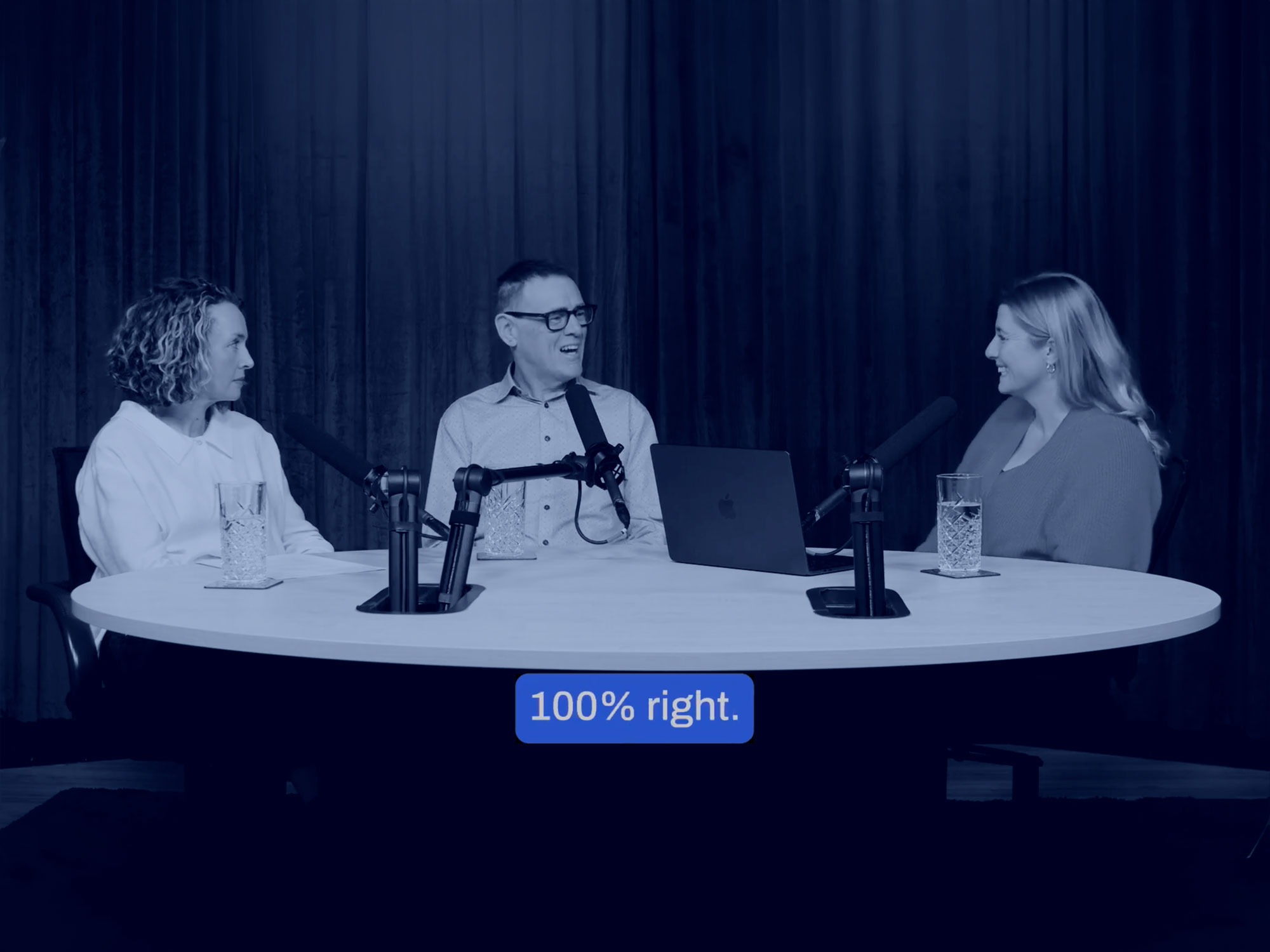
In Episode 2 of Conversations on Energy, Factor co-founders Jessica Venning-Bryan and Simon Pohlen talk about what the transition actually requires, and where the gaps between ambition and reality are widest.
Making clean energy is one challenge. Getting it to where it is needed is another one entirely, and it is the one that gets the least attention.
The International Energy Agency estimates that $600 billion USD a year needs to be spent on upgrading global distribution infrastructure to support the energy transition. Currently, the world is spending around $400 billion. That gap, a third of what is needed, is one of the most significant constraints on the pace of the transition, and most people have never heard of it.
Jessica uses Auckland as a local example. Vector, the distribution company serving the city, needs to invest $50 billion over the next 25 years in local infrastructure. That is one mid-sized city by global standards. Scale that up and the numbers become very difficult very quickly.
Simon makes a point that reframes the challenge entirely. The issue is not just that the world needs more electricity. It is that the way electricity is produced, stored, and consumed is changing at the same time, and the whole system has to adapt to that simultaneously.
Australia is a useful case study. Hundreds of thousands of batteries have been installed there in the last twelve months. And yet, as Simon notes, regulators and commentators are now saying that consumer behaviour has not changed to match. The batteries are there. The virtual power plants that would allow them to be used collectively when the grid needs it are not working as intended. The hardware problem is being solved faster than the human problem.
That human problem is fundamentally a pricing and product problem. If you want someone to change their behaviour, there has to be something in it for them. And the products that create those incentives in the new energy system largely do not exist yet.
One of the more interesting threads in the conversation is around how we value electricity, and how that is about to change.
Jessica points out that the value of electricity is not fixed. It changes depending on when it is needed and where. Energy at peak demand times is worth significantly more than energy at 3am. A battery that can store cheap solar energy from the middle of the day and discharge it at a more valuable time is worth something very specific, and that value is different from the value of the solar panels that charged it.
We understand this kind of pricing instinctively when it comes to other things. Tomatoes cost more in winter. Flights cost more on Fridays. We have just never applied the same logic to electricity. But as EVs become mainstream and households start making active decisions about when to charge them, that is going to change. Time based pricing, Jessica believes, is very much the future of retail energy.
For utilities and retailers, this is not just a challenge. It is one of the most significant commercial opportunities the sector has seen.
If a retailer gets product and pricing design right, they can build solutions that work better for the customer, better for the business, and better for the environment at the same time. That alignment of incentives is new. It has not existed in the same way before, and the retailers who recognise it and build for it are the ones who will lead the transition.
Commercial customers are already ahead of this curve. Businesses are hiring energy managers, installing solar at scale, and moving from being price takers to active participants in the energy market. The sophistication on the commercial side is accelerating, and the products that serve those customers need to keep up.
When Jessica and Simon started working together at Flick Electric, there were nine EVs in New Zealand. Nine. The transformation since then has been significant. But both of them are clear that what has happened so far is a prelude to what comes next.
The pace of the next decade, Simon says, is going to be so much faster and so much bigger, on a totally different scale.
For Factor, the goal is straightforward: make sure the commercial technology needed to design and deliver the products that accelerate the transition is not the thing holding it back. The hardware is moving. The behaviour change is coming. The pricing and product infrastructure that connects them is what Factor was built to provide.
So we all understand that kind of fundamentally, but we've just never applied it to electricity.
...we kind of saw this coming. I think we were kind of impatient and frustrated that it wasn't happening fast enough.
But the next decade is going to be so much faster and so much bigger, and on a totally different scale.
There wasn't the same opportunities that there are today.
...literally hundreds of thousands of batteries installed in the last 12 months.
What do you think is sort of most misunderstood about where this transition is hitting, and what companies should be doing and how they can be innovating more?
I think one of the things that is really misunderstood by most people is that the energy transition is not just about, like, buying an EV or adding a few solar panels to your house. Those are definitely good things, don't get me wrong. But the transition on the scale that is needed globally to make the impact we need it to make on climate change is obviously far more significant than those kind of small actions that are taking place — the ones that people are the most familiar with. And the bit that most people have never thought about is actually — making clean energy is really good, but we've then got to get it to where it's needed. And so there's this whole industry around distributing energy — like getting it from where it's made to where it's used — that most people never think about. And that part of the market requires this immense investment. So the International Energy Agency believes that $600 billion USD a year needs to be spent on upgrading global distribution infrastructure to support the energy transition — like, it is an immense amount of money — and that at the moment we're globally only spending about $400 billion. So we're really only investing two thirds of what we need to invest to actually make the transition possible at the scale that is needed. And so what we think about a lot is then, what is the value of a unit of electricity where it is needed, not just like where it's made? What's the value of making it? Because you can kind of do some economics on, you know, what does a solar farm cost to put in place and to run. And so that's one thing. But actually, what's it worth where it is actually needed and when it is needed? Because also, we all demand electricity at certain times of the day. We don't demand electricity while we're asleep. So the value of it at some times a day is very, very high. The value of it at other times of day is very low. And so those sorts of big questions about what is the value of electricity, where it is needed, and that takes into account the cost of actually getting it there — I think those are some of the big questions that most people aren't thinking about.
There's some big, big challenges in enabling this totally amazing technology, isn't there? Yeah. And for people in New Zealand, just to give, you know, a local example — Vector, which is the distribution company that supports Auckland, they have to invest $50 billion over the next 25 years in their local infrastructure. So that's just one city, you know, a big sprawling city, but it's one city, and that's how much they have to invest. And that's a huge amount of money.
Yeah. Absolutely. Auckland is not a big city globally. Globally it's not, right. Yeah, exactly. And when you think about the global kind of demand for electricity — we've heard it's set to, you know, double by 2050. So there's more requirements from the world of energy than we've ever had before.
Si, what do you think is kind of the challenge — some of the challenges with that immense desire for energy that you think people are maybe not so prepared for, maybe retailers or companies? What are they missing, do you think?
Yeah, I think if it was just a matter of we're going to have twice as much energy, then that probably would be a big problem. But actually the problem is much bigger than that. And the reason it's much bigger is because the way that energy is going to get produced, the way it's going to get stored, is changing radically. So, you know, the explosion of EVs and solar panels and batteries at home has basically changed how we think about the whole system. It's a completely different system. And it's interesting — I was reading an article just a couple of days ago in an Australian context. And Australia's really interesting because they've gone all in on batteries — literally hundreds of thousands of batteries installed in the last 12 months. But now the energy sort of regulators and commentators are saying, well, actually, that's great, but we're not getting enough consumer behavior change. We need customers to be, you know, engaged in virtual power plants — VPPs — and so that we can use those batteries en masse when the system needs them. And consumers aren't changing that behavior. So as well as this massive system change, you then need to drive consumer change, which then comes to — okay, we now need to build products that we've never built before in the energy industry. And part of building those products is pricing them, which is where we can sort of play a role. But I think it's those kind of challenges — like, you know, I think people think about maybe just the hardware side of it, and maybe a bit about the software side, but then there's the human side. And if I want someone to change their behavior, then there has to be something in it for them, which means products that we haven't had before.
Yeah, absolutely. It's those — harking back to those Flick days, isn't it, educating people on the market — but also, yeah, but also just going, okay, well, if I've got a battery, you know, how should I be rewarded. Yeah. Because how I should be rewarded for my battery might be completely different from how I should be rewarded for my solar panels. And going back to Jess's point about electricity having a different value at different times of the day — if you look at Australia and you see, well, actually they've had this solar glut in the middle of the day, which means energy then is not very valuable. But so therefore my battery, which can provide energy at more valuable times of the day — well, what's the right mechanism for rewarding customers then to participate in a way that they're not at the moment.
Yeah. You can see how Factor as well — kind of the ability to price some of these more interesting shaped products and ways that we incentivise customers to change your behaviors is right at the core of that, right? And as it gets more complex. Yeah. And the ability to do that, and to quickly reprice and test different things, because no one knows what the right answer to these questions are. And we're just going to have to learn to a certain extent by trial and error, or by fast feedback loops. And so I think pricing energy used to be a lot easier, because it wasn't something that was changing so dynamically. In our new world, in our new energy system, these things are changing really dynamically, really quickly. And if you — I think also, if you imagine a world where everybody has an EV, right, so suddenly your energy demand at home has gone much higher, and you're demanding more electricity. So every time we convert a vehicle from fossil fuels to electricity, by buying an EV, we might be reducing the amount of fossil fuels that are needed, but we're increasing the amount of electricity that's needed. And so if you think about a household that's now got an EV, so their demand for electricity has got a lot higher, I think that is the trigger for us entering this world where people will start to discern when they want to charge that EV and when they don't, based on price. And we're really used to buying things based on seasonality, which is like a price mechanism — like we do it at the supermarket all the time. Do your tomatoes cost you more in the middle of winter? Yes, they do. Do they cost you less in the middle of summer? Yes, they do. So we all understand that kind of fundamentally, but we've just never applied it to electricity. But I think now, with people investing in EVs, and if their utilities are offering time based pricing, which we believe is very much the future of retail, then we will eventually see that behavior change. And it's not that it is completely foreign to people — you know, they do it at the supermarket. It's just, okay, now this is actually something that I also do at home when I choose to power my vehicle.
What do you think is kind of the role of the retailer as we emerge in this more complex buying and selling and moving energy space? How can they be kind of leading the way?
Well, what I think is really exciting for a utility or a retailer is that actually, if they get pricing design right, or and product design right, they can actually come up with solutions that are much better for the customer, but also much better for them as a utility. And then the third order effect is actually that they're better for the environment. So, you know, if you are selling to a customer energy at a time of day, that it is cheaper for you to buy that electricity — you know, there are ways to structure that product so that it works for everybody. And I don't think that opportunity has existed in the same way before. And it will be — I think this transition is very much going to be led by those utilities that understand that opportunity that is there for them, but also have a really strong desire to develop better products for their customers. Because if they do that, that's how they win customers, that's how they keep customers. But you've got to have a way of thinking within a utility that is very holistic and very reflective of "when our customers win, we win." And, you know, I like to think that that mindset is very much changing in competitive energy markets.
That margin question sits underneath it all, doesn't it? If we can fiscally incentivise people, customers and retailers to be doing this, then we can — we're going to obviously drive more innovation as well.
I think the margin one's an interesting one, because lots of people sort of balk at the idea of energy company margins. But if you've worked inside a retailer, or very closely with a retailer, you'll understand that margins actually are pretty small on an individual customer basis. And I think there's a bigger and more interesting question there about, you know, do we actually value electricity? Because if it's something we value that we're buying, then actually the company that delivers that to me should be allowed to make money in that process. And, you know, that is true of everything. You know, if you buy a car, well, the manufacturer of the car gets to make some money on that. If you buy tomatoes, if you buy clothes, you know, we kind of accept that everybody along that chain is making some money, and electricity should be no different. And I think you then get to this interesting question, which is like, how much do I actually value that electricity. And, you know, I think there's a problem where people don't — they kind of simultaneously value it because they all want it. They want to be able to turn on the lights and have hot water and all of those good things that electricity enables. But at the same time, they kind of feel a bit bristly about the company that got it to them getting rewarded for their role in that value chain. And I think as people get closer and closer to the energy system — because they've bought an EV, or they've put in some solar panels, or they've come to understand that we aren't actually producing as much energy as we need, and so we're getting to this kind of supply crunch in almost every developed market — I think people will start to understand the value of electricity a little bit more, and start to take more positive actions about controlling their own usage, about, you know, thinking about the time of day, about thinking about more, about where they want to procure it from — do they want to make sure they're working with a retailer that is invested in renewables? You know, all of those questions around how do we value it, and, you know, who's allowed to be rewarded along the way, and what am I willing to pay, and am I willing to make a behavior change so that I pay a different amount — those all kind of personal economic decisions — I think we're going to see those changing over the next decade quite significantly.
Yeah, it's really — with that education, it's really changing our understanding of energy entirely as consumers, but also as, you know, with your commercial customers, residential customers, it doesn't matter, you're approaching it in a completely different way.
Well, what's interesting about commercial customers is that they're becoming incredibly sophisticated around the energy purchase. And we're seeing lots of teams now start to include roles like energy managers. Now, those roles might have existed in big industrial plants in the past, but we're starting to see them exist in, you know, more office based corporates — because buying energy is not a sure thing anymore. Being able to access the energy you need, where you need it, and when you need it, is not secure in most developed markets. And the price of electricity is becoming much more volatile because of that supply and demand dynamic. I think also the opportunity for large organisations to participate — absolutely — and go, okay, I could install solar, and then that changes the whole equation for them. They're no longer just a price taker. Yeah. They're now involved in that. And because they can do it at scale, because they're large organisations. And that's super exciting. So while households might be taking micro actions and gradually becoming more educated and more involved, corporates and industrials are really leaning hard into this transition and seeing the opportunity in it.
Si, with that, I guess, in mind — if you project yourself ten years into the future, what do you — you know, what do you see a really thriving, healthy energy ecosystem looking like there?
Well, look, I think one of the things we talk about, especially with the transition to clean energy and with, you know, what we need to do to counter the effects of climate change, is that there needs to be commercial products for that to work, because, you know, everyone — everything is bought and sold on a commercial basis. So I think that what I'd really like to see in the next ten years is that the, you know, the technology required to create those commercial products to accelerate the adoption of clean energy — that that is not holding that adoption back, and that it's enabling it and kind of accelerating it. And so I think that's what I personally would like to see. And that's what I think Factor is also trying to deliver, trying to make it easier to deal with that complexity, and deal with being able to rapidly react to changing conditions and provide the kind of information, the calculations necessary for that.
Exciting. It's an amazing space to be in, and an exciting, changing, rapidly evolving space to be in. And so hopefully — look, I mean, look, it really is. And like, I think when Jess and I first started working together at Flick, we kind of saw this coming. I think we were kind of impatient and frustrated that it wasn't happening fast enough. I remember looking at the case for batteries 12 years ago for homeowners, and there wasn't — because of the high cost of batteries at that point. There wasn't the same opportunities that there are today. And so it is really exciting that it actually is happening. And I think it's only going to — the pace is only going to accelerate.
Yeah. I mean, when we started working together, there were nine EVs in New Zealand. I actually looked up the numbers recently because I kept saying to people there were less than ten. And I looked it up, and sure enough, there were nine. So, you know, the difference just in our journey of building energy software, I mean, it's huge. But the next decade is going to be so much faster and so much bigger, and on a totally different scale.
Awesome. Well, Factor is well placed, so we'll be watching and excited to see where Factor goes and how it, you know, enables this exciting transition.
To learn more about Factor, head to our website usefactor.com